I think God has placed an innate sense of competition in our DNA (somewhere). This also includes a desire to run the race. Obviously, there’s more competition and desire in some people than others. Along with that, the race can mean a plethora of things to each of us. But one thing is certainly true. We undoubtedly all want to win. Nobody hopes to use their thumb and index finger to place an L on their forehead.
While a young boy, I believed I was very fast. As a young man, I was definitely full of myself. Consequently, I would sometimes challenge other men to a foot race. This typically happened at parties and get-togethers. I’d even challenge the occasional woman. In fact, my wife was one of them; we were both very competitive. I beat her handily, by the way. Alas, as age takes its cruel toll on us, we all slow down. Even the next generation eventually replaces professional athletes.
“16 Confess your sins to each other and pray for each other so that you may be healed. The earnest prayer of a righteous person has great power and produces wonderful results. 17 Elijah was as human as we are, and yet when he prayed earnestly that no rain would fall, none fell for three and a half years!” — James 5:16-17
Recently, I’ve been reading in the book of James. These verses reminded me of the power of prayer in a fresh way. James shows us that we experience healing, breakthrough, and spiritual strength through two simple but important practices: confession and earnest prayer.
Verse 16 calls us to confess our sins to one another and pray for each other so that healing can flow. Confession certainly isn’t about earning forgiveness from Jesus. On the contrary, His grace already covered us at the Cross. Instead, confession is about walking in the light. It keeps the enemy from cornering us with shame and isolation. It also gives Believers permission to live in an honest, transparent, and grace-filled way. We begin to heal when we step into the light with a trusted community and invite God into our weakness.
Then James points to Elijah in verse 17. He writes of a man “as human as we are.” A man whose earnest prayers absolutely shaped the world around him. Elijah wasn’t perfect; he was simply willing. His life reminds us of something we should never forget. That fervent, faith-filled prayer from ordinary people invites extraordinary intervention from God.
These Verses Remind Us
Honesty opens the door to healing. Equally important, earnest prayer opens the door to God’s power. We don’t need to be spiritual giants. We just need to always surrender ourselves, be humble, and be willing to pray.
Considering this, is there something in your life He’s prompting you to confess so you can walk in the light? And how can you take steps today to pray in faith, believing He hears and responds?
“From eternity to eternity I am God. No one can snatch anyone out of my hand. No one can undo what I have done.” — Isaiah 43:13 (NLT)
In this verse, God reminds His people of His eternal power and sovereignty. From before time began and until long after it ends, He is unchanging. No one can thwart His purposes. At the same time, no one can undo His promises. For those of us who belong to Christ, this is the ultimate assurance. To put it simply, nothing and no one can separate us from His love.
“Repent, then, and turn to God, so that your sins may be wiped out, that times of refreshing may come from the Lord.” — Acts 3:19-20 (NIV)
Peter had just performed a miracle—healing a man who couldn’t walk. The crowd was obviously amazed. But Peter didn’t take the credit. Instead, he pointed people to Jesus. Additionally, he told them to repent and turn to God.
“Such knowledge is too wonderful for me, too great for me to understand!” — Psalm 139:6
Psalm 139 is definitely one of my favorite chapters in the entire Bible. The picture that David paints of God’s goodness and closeness is so comforting. It is nearly impossible to read those words and not feel God’s love. Without a doubt, it truly is too great for me to understand!
Do you feel like God is distant? Maybe you feel like He doesn’t understand you? Then, I would encourage you to read Psalm 139 and let His Truth change those thoughts.
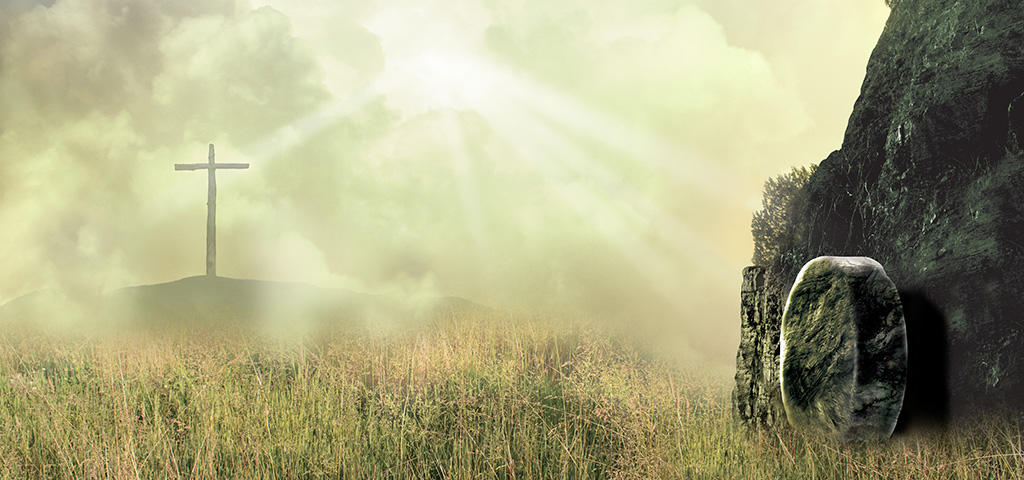
“He is not here; he has risen, just as he said. Come and see the place where he lay.” — Matthew 28:6
Could Easter be more than colored eggs, chocolate, and bunny rabbits? What if it is much, much more? Perhaps it’s a true story about the life and death of a man named Jesus (who really did rise from the dead)? That is to say, what if Jesus is truly alive right now? This truth might just change your life.
Last weekend, we witnessed how the truth about the radiance of Jesus’ Resurrection changed lives. It was one of our largest attended weekend services ever. On top of that, close to 70 people responded to the Gospel message!
“I write these things to you who believe in the name of the Son of God so that you may know that you have eternal life.” (1 John 5:13)
With Christmas just a couple weeks away, I’ve been contemplating eternal matters. I’d like to share two different true stories that I experienced a few years ago. They are similar stories but have different endings. Both accounts involve funerals. One involved someone I’d never met, the other a dear friend.
“When the rule of Rehoboam was established and he was strong, he abandoned the law of the LORD, and all Israel with him. … 5 Then Shemaiah the prophet came to Rehoboam and to the princes of Judah, who had gathered at Jerusalem because of Shishak, and said to them, “Thus says the LORD, ‘You abandoned me, so I have abandoned you to the hand of Shishak.’” — 2 Chronicles 12:1,5
I recently read this story in 2 Chronicles 12:1-8. I encourage you to read the whole passage. In light of our King Jesus series, I thought there were some timely lessons from the rule of Rehoboam.
Then Jesus said to her, “I am the MESSIAH!” – John 4:26
Without a doubt, this is one of my favorite encounters in the entire Bible. You remember the story. In the Gospel of John, Jesus passed through a region called Samaria on His way to Galilee. As the reader, we should by all means know that (at this time in history) the Samaritan people were despised by the Jewish people. The Jews considered the Samaritans to be inferior economically, racially, spiritually, and socially. In fact, they were “the dogs” and often even hated.